In today’s market, customer experience isn’t just a brand pillar, it is the brand. Each moment is a referendum on trust, and customers often vote with their wallets. In PwC’s 2025 Customer Experience Survey, more than half of consumers (52%) say they stopped using or buying from a brand because they had a bad experience with its products or services, while nearly a third (29%) stopped due to poor customer experience, either online or in-person.

Yet many executives seem to be playing a different game entirely. About nine out of 10 say customer loyalty has grown in recent years, but only four in 10 consumers say the same. That’s not just a perception gap. It’s a blind spot with a direct line to lost revenue.
In a world where trust is table stakes for loyalty and data can fuel a better customer experience, bridging this gap requires more than a refreshed loyalty program — especially in a volatile economy and with the rapid rise of AI. It takes the ability to anticipate, design and deliver the desired experience in real time, every time.
Executives overestimate customer loyalty growth in recent years

Discovery isn’t decision: Early touchpoints are critical but often underestimated
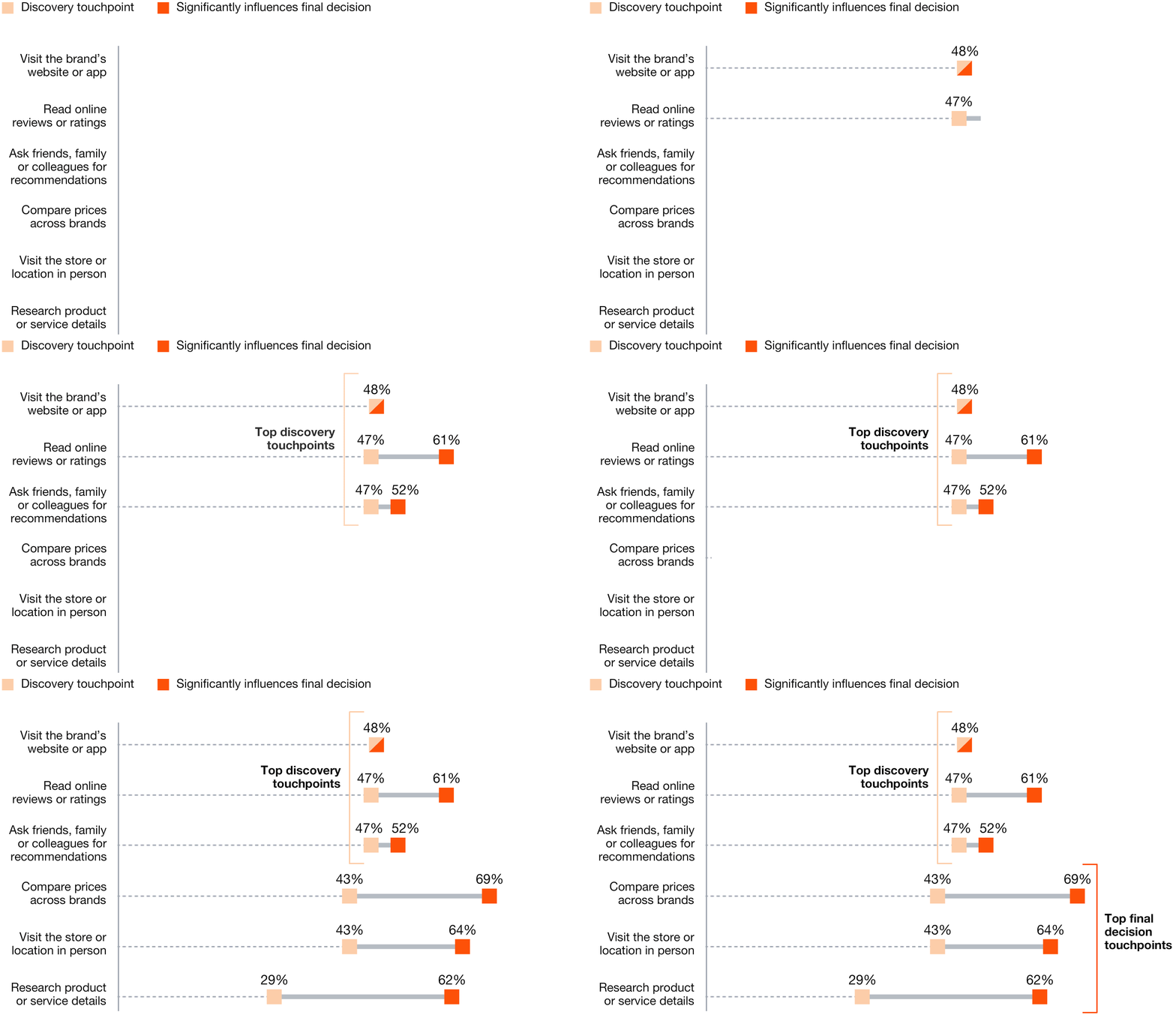
Base: Consumers 5,511
Source: PwC’s 2025 Customer Experience Survey
Price and quality are no longer differentiators. They’re the cost of entry. The real battleground is how you layer personalized, meaningful value on top of those basics, in ways that feel intentional and human.
Our survey shows 70% of executives think customer expectations are outpacing their organization’s ability to adapt. That’s where trust can erode, and competitors could win. Designing for delight requires experience with intent — anticipating what matters to each customer segment and operationalizing it at scale.
Don’t forget that expectations vary across generations. Boomers are less likely to care about your social media presence and sustainability efforts, our survey found, but millennials and Gen Z are watching your values and what you do online. Neglect in any area important to an age group can damage CX and quickly fracture loyalty.
Where companies can move beyond table stakes to earn lasting loyalty
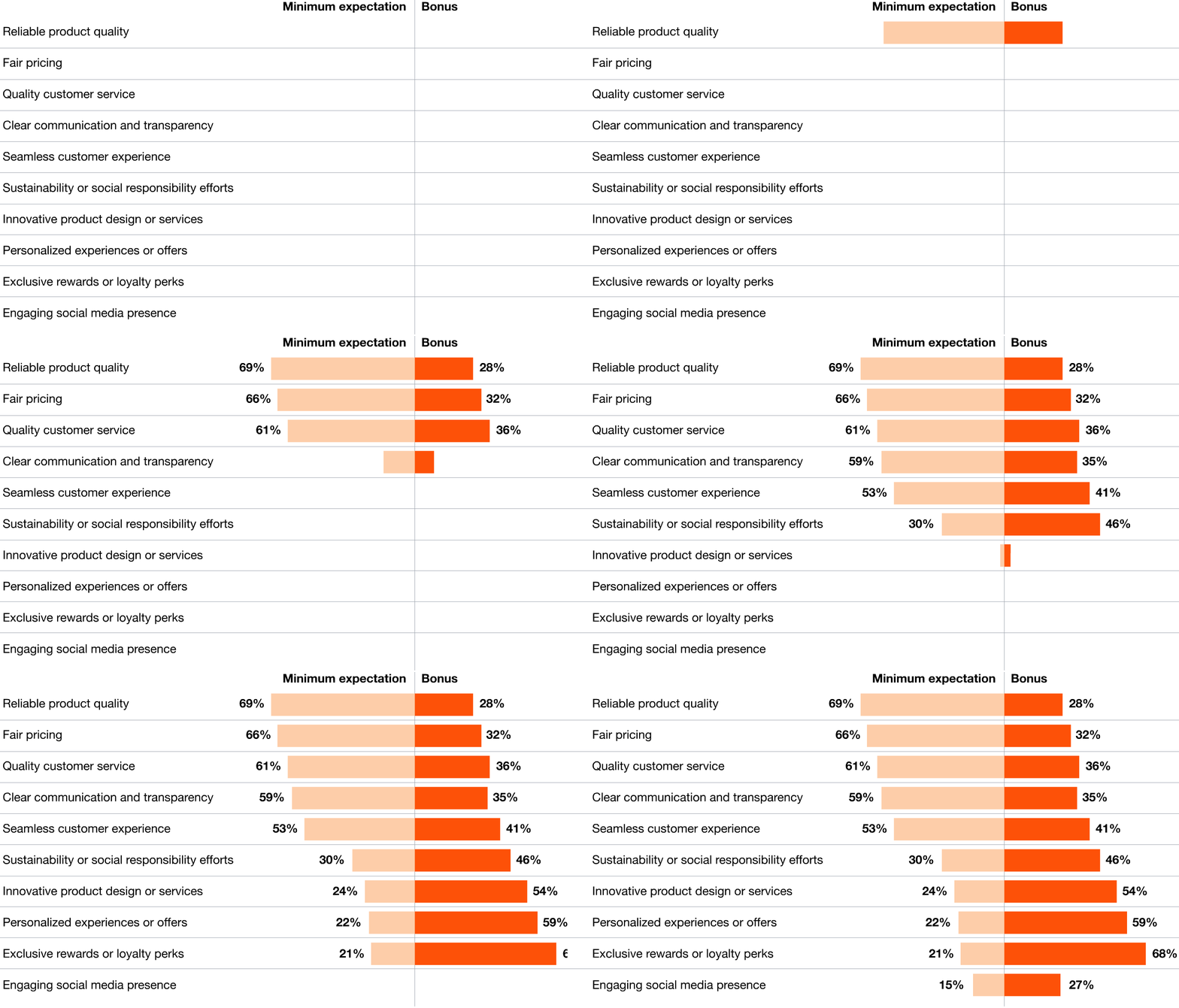
Base: Consumers 5,511
Source: PwC’s 2025 Customer Experience Survey
With the rapid rate of adoption and shift from traditional search and discovery, AI has become the new frontier in customer engagement. But even as some consumers become accustomed to AI, frontiers can still be rough terrain. More than half (58%) of consumers say they're only somewhat or not at all comfortable using AI tools to engage with brands. In addition, our survey shows the pressure to implement AI often comes more from internal ambition than from customer demand. The result? A gap between what companies can automate and what some customers actually want.
AI remains a work in progress

Base: Executives 406, Consumers 5,511
Source: PwC’s 2025 Customer Experience Survey
As AI use increases overall, it’s clear that many consumers prefer some interactions more than others. Nearly half (49%) say they’re likely to use AI to track an order or delivery status, while less than a third (29%) say they would use it to make a payment. But those numbers pale when compared to the 86% who say human interaction is moderately or very important in their brand experience.
Successful brands don’t deploy AI for its own sake. They integrate it with intention, using it where it accelerates service and seamlessly handing off to humans where empathy and judgment matter. And those who get it right could open another path to stronger loyalty. We found that consumers with higher AI usage are much more likely to say they’ve become more loyal to brands in the past few years. In addition, high AI users are generally more willing to share personal data for more personalized experiences, and they show loyalty in more ways.
More-loyal consumers see greater benefits from AI in brand interactions
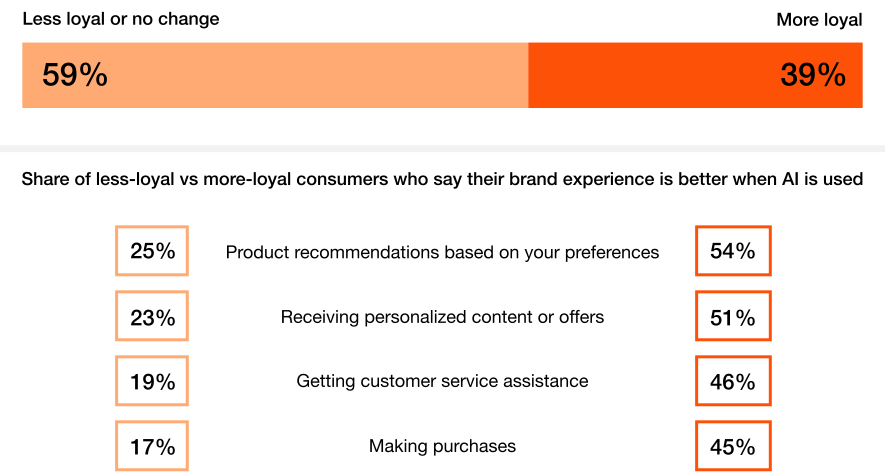
Base: Consumers less loyal or no change 3,342, Consumers more loyal 2,098
Source: PwC’s 2025 Customer Experience Survey
Loyalty programs are in danger of solving the wrong problem. More than half of executives (57%) say that while customer loyalty is vital, their loyalty systems aren’t delivering the outcomes they need, and 46% say their company's current loyalty program will be irrelevant in three years. The core issue isn’t points or perks. It’s a misalignment between how companies define loyalty and how customers demonstrate it.
Many loyalty programs are designed for signals customers don’t reliably send. Compared to consumers, execs overestimate such things as customer feedback, brand communications and social media engagement in customers’ brand loyalty. Then companies wonder why perks underperform.
The solution starts with a reset. Define loyalty based on observable behaviors, not guesswork, and design for repeat choice, referrals and incremental spend. That means mapping the moments where loyalty is truly earned or lost and hardwiring operational playbooks to win those moments in real time.
How consumers show loyalty vs. how execs perceive it

Base: Executives 406, Consumers 5,511
Personalization is a paradox. Customers want it until they don’t. More than half of consumers (53%) think that it’s worth it to share personal information if it makes their experience interacting with a brand smoother. But mishandle that data and 93% say that a brand will lose their trust. In other words, every personalization strategy carries a built-in trust trigger.
This is where many companies stumble. Executives often assume more data equals more value, but many consumers don’t see it that way. Nine out of 10 consumers are willing to share some type of personal data for more personalized service, but they seem to calibrate their trust based on what’s collected, how it’s used and whether the benefit feels tangible. The more intimate the data — such as biometrics and real-time location — the more that willingness drops.
The lesson? Treat privacy not as a compliance box but part of the customer value proposition. Winning brands integrate technology with intention — collecting only what’s necessary, explaining why it matters and delivering value in the moment. Respecting boundaries is no longer just a legal safeguard. It’s a competitive advantage.
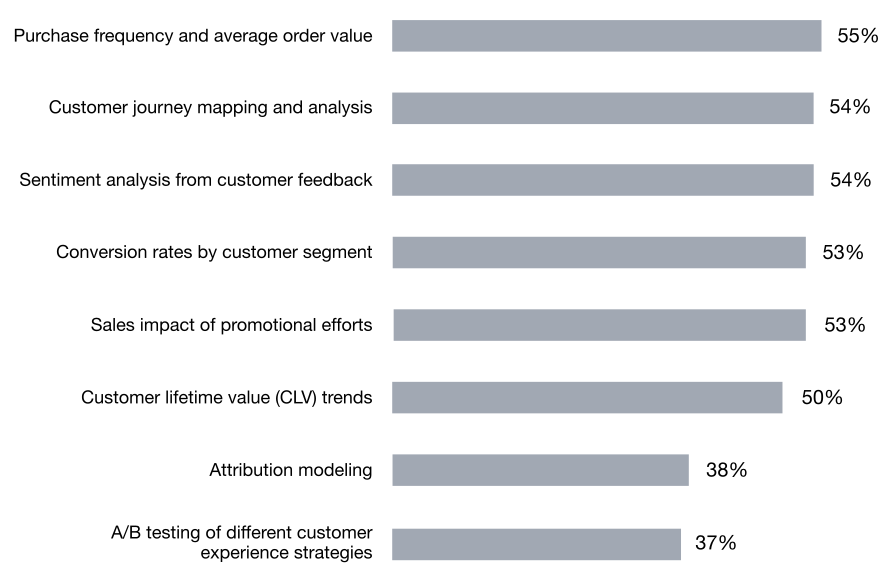
Many customer experience dashboards are packed with data, but deciphering it can be difficult. While four out of five (84%) of executives say they’ve increased spending on customer loyalty, 83% admit they need better tools to measure what’s actually driving purchases. You might as well be driving a car with no speedometer or navigation — going nowhere and no idea how fast.
Emotional engagement, incremental spend and longitudinal loyalty are the standards in CX measurement. Traditional metrics like CSAT and NPS are still useful, but modern loyalty demands metrics that capture sentiment and link loyalty initiatives to tangible business outcomes.
This isn’t just about knowing if customers are satisfied. It’s about knowing if satisfaction is translating into loyalty and loyalty into enterprise value. Leading companies use capabilities like conversion rate attribution and customer lifetime value tracking so they can translate customer experience into business impact.
Tools executives use to track customer preferences
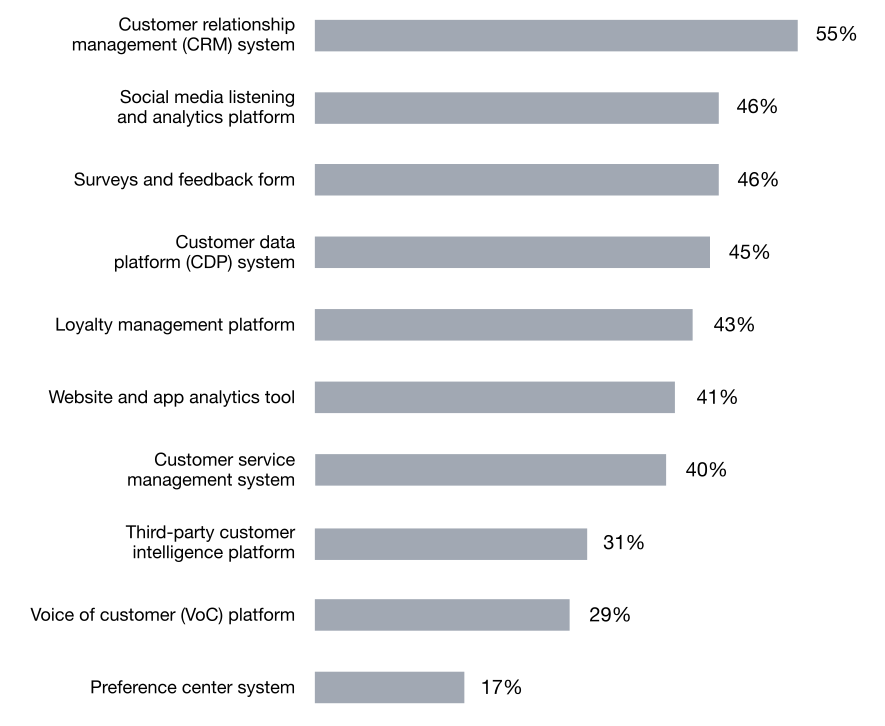
Base: Executives 406
Source: PwC’s 2025 Customer Experience Survey
How executives measure the customer touchpoints that matter most
Base: Executives 406
Source: PwC’s 2025 Customer Experience Survey
Post a Comment